Keeping Ducks
General
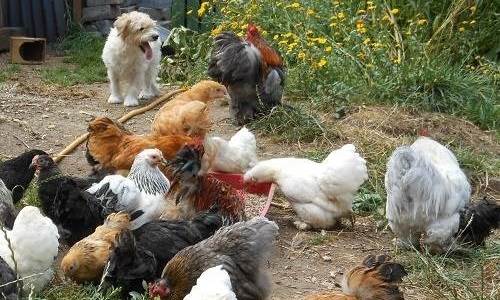
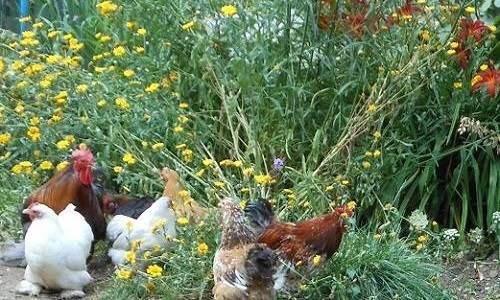
They say that chickens are the gateway animal to further farming adventures. When you are ready to skip through that gateway and expand your farm, lots of people look to adding different kinds of poultry. Common backyard poultry include turkey, geese, guineas & ducks turkeys are quite large and geese & guineas are quite loud so many will settle on ducks. Ducks can be a great addition to a small farm. They lay large eggs about as regularly as chickens (click here to read more about duck eggs). Duck eggs are excellent for baking! Ducks don t require a tons of room, don t make a ton of noise, and can often fit right in with your existing chicken set up. But ducks are definitely not chickens. While raising the two kinds of poultry together is certainly possible, each species has some different requirements. How can you make sure your mixed flock is happy & healthy? The key is making sure even though both flocks are living together, they each have what they need. Water Perhaps the biggest hurdle you will face when keeping ducks & chickens together is what to do with the water. Chickens do great with nipple waterers or water fonts they can dip their beak in for a drink. Ducks on the other hand need to have access to water that is deep enough for them to dip their head in. They need to be able to dip their head in the water to clean & keep their nostrils moist, to clean their eyes, and to mix their food with their water for digestion. Ducks can t use traditional chicken water fonts because their bills won t adequately fit in the small font opening. They can use nipple water systems, but they will still need to have a bowl of fresh, clean water available for cleaning & eating. Of course the ducks don t just gently dip their bills in the water. They splash. They get in the bowl and try to swim. They add dirt & feed to the water. They make mud everywhere. Chickens don t care for mud and muck. They don t like when their water is dirty. I have my chickens & ducks share a water bowl. I scrub it out daily. I keep it outside of the coop so that the shaving inside will stay dry. I also move it around the run so I don t have one area getting overly muddy. While on the subject of water, let s talk about swimming. Ducks technically don t *need* to have a pool for swimming as long as they have a deep water dish. But they will be *super* happy if you give them a little kiddie pool to splash about in. It also might make them less likely to try and swim in the water bowl (but don t hold your breath!). Don t worry about your chickens around the pool. For the most part, they will just stay away from it, or maybe will occasionally drink from it. Adult chickens don t like to swim, but they can naturally float so you don t have to worry about them drowning if they accidentally fall in. If the water is shallow enough, you might find your chickens like to stand in the water to cool off in the summer. Young chicks could however drown if left unattended near a pool. When you have chicks in your flock, consider gating off the pool, keeping it empty until they are grown, or only filling it up when you are around to supervise.
Ducks can make very good pets as long as you understand a couple of important things about them.Hello! First of all, ducks do not really like to be picked up in general. Over the years, I ve known a few individuals that didn t seem to mind, but the vast majority of ducks just don t feel comfortable being lifted up. Ducks do like being around you and watching what you re doing though. They like to sun themselves on a sunny hillside in your yard, and they love it when you refill their wading pool. Some breeds of duck are friendlier than others. If you are looking for a very friendly pet duck breed, focus on the larger domestic ducks rather than more wild ducks species. The large domestic ducks don t fly, which makes keeping them very simple and easy. They are also used to being a part of a farm or homestead and so they adapt well to a backyard flock.
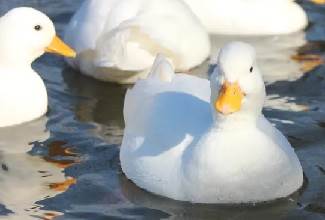
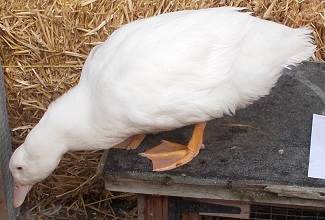
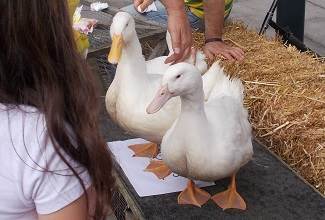
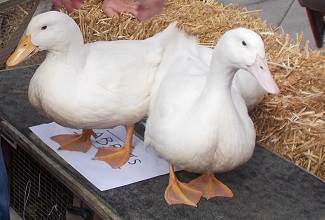
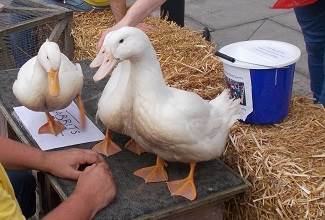
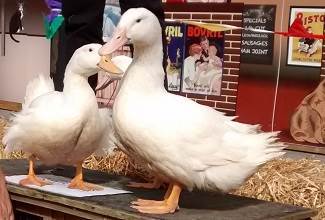
Ducks should live outdoors and have access to grassy areas and water in which they can swim and clean themselves. In my current flock, my favorite duck-friends are my Anconas, Cayugas, and Rouens. The leader of my flock is a female Rouen, who I call Double Tuft because she has two little pompom like tufts on the back of her head. She walks right up to people and loudly quacks away, voicing all her thoughts. Rouens originated in France and are beautiful ducks. They look like traditional mallards but are about twice as big and very friendly. Males have bright green heads and dramatic silver and wine coloring, and females are brown with the fancy azure-blue stripe of color on their lower wings. Cayugas are beautiful ducks too pure black, but when the sunlight hits them at different angles the feathers sheen green and purple. They are also quite friendly, and Cayugas lay gray colored eggs which are a lot of fun. Ancona Ducks are mostly white but with black splotches. Some people say these are the friendliest of the duck breeds. Because the black markings are different on each duck, the individual Anconas in your flock are easy to tell apart. A big white duck with a bright orange bill and big orange feet is what usually comes to mind when one thinks of a pet duck and that breed is a Pekin Duck. Pekins are large, pure white ducks and are also very friendly. Our head drake, or male duck, is a big six-year-old Pekin named Teddy. He tries to avoid allowing people to pick him up, but once you do manage to catch him; he does not mind sitting on your lap for a while. Teddy is heavy and has almost mind-blowing thick feathering. Three ducklings isolated on white The White or Black Crested Duck is another great pet duck option. They are big and have a funny, and yet also elegant, white crests on their heads so much fun! Perhaps these big domestic ducks are just too much duck for you though In that case, perhaps you should consider Call Ducks. Call Ducks are the cutest of all the ducks. They are small, don t eat as much as the larger ducks, and don t need the space that the larger ducks require. They have stout little round bodies, with short necks and legs, round cheeks, and adorable little bills. Call Ducks come in a variety of colors/patterns. They have a long history of living with people and can make excellent pets.
In general ducks get along with one another and with other birds. One thing to note, you should not just have one duck. Ducks, like chickens, are social creatures and need the society of a flock. Ducks tend to form tighter bonds with one another than chickens do. Be careful handling ducks and teach children to handle ducks carefully. Ducks being raised as pets are usually handled more, and it is important that the handling is gentle and positive for the ducks. If it is too rough or aggressive, your ducks may decide that they need to avoid people. Also, ducks have delicate legs and feet and heavy bodies; they are water creatures and are not made well for land. You cannot drop a duck like you could a chicken; a chicken can use its wings to land more softly, but a duck will get hurt if dropped from any height. Always place ducks slowly and directly onto the ground. The excessive chasing of ducks can also lead to leg injuries.Ducklings drinking from the lake Ducks also should have some sort of pool or pond. A plastic wading pool works very well. It is a blast to watch them diving and splashing and preening in the pool. If you can provide your ducks with what they need, Ducks can make great pets. They are sweet and fun birds and are truly a backyard joy.
If you have a smallholding or even a fairly large garden, it may have crossed your mind that a couple of ducks would make the scene complete. Happy, healthy ducks have many benefits- they lay delicious eggs, control bugs and insects, and are actually much easier to keep than other poultry such as chickens. While ducks do not lay as prolifically as chickens, and do not lay at all in the winter months, duck eggs have a lovely rich flavour and are larger in size than the usual hens eggs. Keeping ducks in the garden or on a smallholding means that you will need to consider birds that are flightless or have their wings clipped. Ducks can travel a fair distance on the wing, and if they decide to move on, that will probably be the last you'll see of them!
Some good duck breeds for beginners Runner, Campbell and Aylesbury ducks are all good breeds to consider for the beginner, as they are fairly straightforward to care for, and won't fly off. Call ducks are another possibility, but they can be noisy, and also would need their wings clipped to keep them contained. Ducks need a little more open space than chickens, but less overall maintenance. Runner ducks are unusual to look at. They stand erect, and run rather than waddle about. They are of a medium to large build, and good layers, producing 150- 200 eggs over the season. Runner ducks lay their eggs wherever they happen to be at the time, so you may have to hunt about for them rather than checking the coop every day! Campbell ducks are small to medium in size, hardy and friendly. They lay on average between 75 and 150 eggs per season. Aylesbury ducks are the ubiquitous 'Jemima Puddleduck' type- white feathers with a yellow beak. Solidly built, they are slow moving and relatively quiet, and lay between 50 and 100 eggs per season. Call ducks are petite, sweet looking and very personable, but can be incredibly noisy! They require wing clipping in order to prevent escape, and have a relatively low egg production of 25- 75 eggs in the summer months only. Ducks and water Although the above breeds of duck do not need a large expanse of open water in order to be happy, they do need enough space to be able to dip their heads and clean their eyes, and paddle about. A small to medium sized child's paddling pool or a small pond is fine, and should be available to them at all times when they are out loose or in their enclosure during the day.
Housing your ducks You will need a suitably sized duck house or coop, with a flat floor as ducks don't perch like chickens. In terms of space, two square feet per duck in the coop is the minimum standard for comfortable living. The duck house should be raised from the ground with a ramp for access, and have a suitably sized doorway for the ducks to get in and out. You should be able to secure the door at night while providing adequate ventilation, to keep your ducks safe from foxes and other predators. In the winter, make sure that the ambient temperature of the coop is warm enough for your ducks at all times. Similarly in the summer, make sure that it is shady enough to provide some respite from the heat. Do not use wire mesh on the flooring of the coop, ramp or wider enclosure, as this can hurt your duck's feet. You will also need to provide a run or enclosure, so that your ducks can go out safely without fear of predators when you are not around. This can be made of a simple plywood frame covered in chicken wire, which you can move around to prevent one particular area becoming worn from overuse. As mentioned, do not use wire mesh on the floor of the enclosure.
Feeding Ducks like to eat slugs and insects, so can be good at keeping garden pests under control- although they will sometimes nibble at plants! A balanced diet for ducks consists of wheat and maize, as well as soy bean oil and meal. A pre prepared compound duck food such as layer's pellets is the easiest way to provide a complete food to keep your duck in top condition. You may have enjoyed feeding bread to wild ducks when you were a child, but bread and scraps are not suitable for ducks as their staple diet! Keeping your ducks happy Ducks are sociable creatures, and you should not keep one duck alone. Too many males with not enough females will fight with each other, sometimes to the death. If you don't want to have to spend time refereeing drake dust ups, keep a minimum of 4- 6 females for every male duck. Collect the eggs your ducks lay on a regular basis, to prevent damage to the eggs and also to prevent the female ducks from getting broody. Always provide clean fresh drinking water (as well as your ducks swimming pond) to ensure that they have access to water that is free of toxins and germs. Ducks do not chew their food, they wash it down with water, and so make sure there is access to drinking water near to the food station also. Make sure that your ducks always have access to their coop, so that they can rest, preen and keep warm. Domestic duck breeds are interesting, inquisitive creatures, and generally tame easily, approaching their owners for food and sometimes following them about to see what they are doing! Ducks can live up to 15 years, so make sure you are prepared to care for your brood throughout the duration of their lives. Finally, always take care when introducing ducks into the garden if you already have other pets such as dogs or cats. Make sure that neither will worry your ducks, or in some cases, vice versa! Introduce them to each other slowly, and make use of the duck's enclosure to keep the animals apart until you are sure that they can all be trusted to play nicely
Keeping Ducks is under construction.
Feeding
Keeping Ducks is under construction.
Keeping Ducks is under construction.

Housing
Keeping Ducks is under construction.
Keeping Ducks is under construction.
Health
Keeping Ducks is under construction.
Keeping Ducks is under construction.


I board small pets for £1 per animal per day. The money raised for boarding goes directly to the education charity Porridge and Rice that works among the extreme poor living in the Nairobi slums.
In addition, if you have small animals that you no longer can care for, regardless of the reason, I will happily take them in and rehome them. If I cannot find them a new, good home, they will live their days out at The Farm at 64.